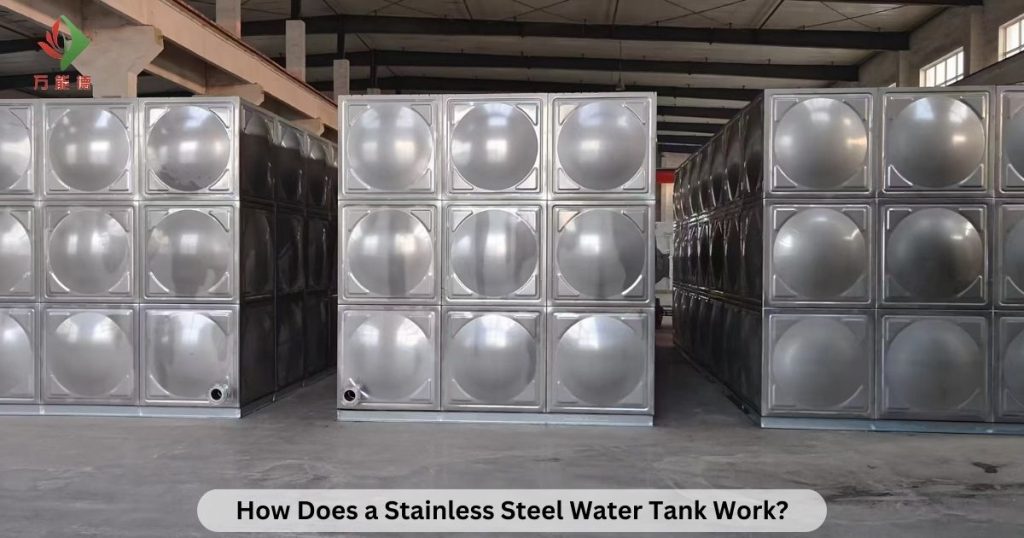
Water is a critical resource for homes, commercial buildings, and industrial facilities. Behind every reliable water supply system is an efficient storage solution quietly working in the background. Among the many storage options available today, the Stainless Steel Water Tank stands out as one of the most dependable, hygienic, and long-lasting systems.
But how exactly does a stainless steel water tank work? Why is it often preferred over alternatives like GRP Water Tank, FRP Water Tank, or Galvanized Steel Water Tank? And how does it fit into modern water infrastructure alongside solutions such as GSC Water Tanks, HDG Water Tank, or SMC Panel Water Storage Tank?
This article explains everything in simple terms—from construction and operation to comparisons with other tank types—so you can make an informed decision for your water storage needs.
Understanding the Purpose of a Water Tank
At its core, a water tank is designed to store water safely and deliver it when needed. Whether the application is domestic, commercial, or industrial, a water tank must:
-
Preserve water quality
-
Prevent contamination
-
Handle pressure and load
-
Withstand environmental conditions
-
Deliver water efficiently to connected systems
A Stainless Steel Water Storage Tank achieves all of these goals while offering superior hygiene and durability.
What Is a Stainless Steel Water Tank?
A Stainless Steel Water Tank is a water storage system manufactured using high-grade stainless steel, most commonly 304 Stainless Steel Water Tank material. This type of steel contains chromium and nickel, which create a natural protective layer that resists rust, corrosion, and bacterial growth.
Depending on usage, these tanks may be designed as:
-
Stainless Steel Drinking Water Tank
-
Rectangular Stainless Steel Water Tank
-
Welding Stainless Steel Water Tank
-
Panel or sectional tanks for large installations
These tanks are widely used in residential buildings, hospitals, hotels, food industries, factories, and municipal water systems.
How Does a Stainless Steel Water Tank Work?
The working principle of a stainless steel water tank can be broken down into five simple stages:
1. Water Inlet and Filling Process
Water enters the tank through an inlet pipe connected to:
-
Municipal supply
-
Borewell or groundwater system
-
Rainwater harvesting system
A float valve or automated control system regulates water inflow. When the tank reaches its maximum safe level, the inlet automatically shuts off, preventing overflow.
2. Hygienic Water Storage
Once inside the tank, water is stored in a sealed, non-reactive environment. Stainless steel does not release chemicals, odors, or metallic taste into the water. This is why Stainless Steel Drinking Water Tanks are widely approved for potable water storage.
Unlike Galvanized Water Tank systems, which rely on zinc coating, stainless steel remains stable without surface degradation over time.
3. Pressure Management and Structural Support
Stainless steel tanks are engineered to handle:
-
Internal water pressure
-
External environmental stress
-
Seismic and load conditions
In sectional designs, panels are reinforced and bolted or welded together, ensuring long-term structural integrity. This makes them suitable for rooftops, basements, and industrial installations.
4. Water Distribution System
Water exits the tank through outlet pipes connected to:
-
Gravity-fed plumbing systems
-
Booster pumps
-
Industrial pipelines
The smooth inner surface of stainless steel minimizes friction and sediment buildup, ensuring consistent water flow and pressure.
5. Cleaning, Maintenance, and Longevity
One of the biggest advantages of stainless steel tanks is low maintenance. The non-porous surface prevents algae growth and bacterial contamination. Periodic cleaning is simple and does not require chemical treatments.
This operational simplicity makes stainless steel tanks a long-term, cost-effective solution.
Why Stainless Steel Is Ideal for Drinking Water
When compared with other storage materials, stainless steel excels in water purity:
-
No rust formation
-
No chemical leaching
-
No micro-cracks for bacteria
-
Excellent resistance to temperature changes
This is why industries with strict hygiene standards—such as pharmaceuticals, food processing, and hospitals—prefer Stainless Steel Water Storage Tanks over GRP Water Storage Tank or FRP Panel Water Storage Tank options.
Comparing Stainless Steel with Other Water Tank Types
Stainless Steel vs GRP / FRP Water Tanks
GRP Water Tank, GRP Panel Water Tank, and FRP Water Tank systems are made from fiberglass-reinforced plastic. They are lightweight and corrosion-resistant, making them suitable for many applications.
FRP / GRP advantages:
-
Lightweight construction
-
Easy installation
-
Cost-effective for large volumes
Stainless steel advantages:
-
Superior hygiene for drinking water
-
Longer lifespan
-
Higher temperature tolerance
-
Stronger structural integrity
For commercial buildings, GRP water tank for commercial buildings is common, while stainless steel is preferred where water purity is critical.
Stainless Steel vs Galvanized Steel Water Tanks
A Galvanized Steel Water Tank or Hot Dip Galvanized Water Tank is made from steel coated with zinc to prevent corrosion.
HDG Steel Water Tank advantages:
-
High strength
-
Suitable for large industrial projects
-
Cost-effective for bulk storage
Limitations:
-
Zinc layer wears over time
-
Not ideal for long-term drinking water
-
Requires more maintenance
This is why many projects combine HDG Steel Sectional Water Tank solutions for raw or utility water, while stainless steel is used for potable water systems.
Role of Stainless Steel Tanks in Integrated Water Systems
Modern infrastructure often uses multiple tank types together. For example:
-
GSC Water Tanks and BDF Water Storage Tank systems for underground or structural storage
-
GSC Panel Water Tank for modular installations
-
GSC BDF Underground Water Tank for space-saving underground projects
-
Stainless steel tanks for final drinking water storage
This layered approach ensures safety, efficiency, and cost optimization.
Rectangular and Sectional Stainless Steel Tanks
A Rectangular Stainless Steel Water Tank is especially popular for:
-
Rooftop installations
-
Space-restricted areas
-
Custom-capacity projects
Sectional tanks can be assembled on-site, making them ideal for buildings where transportation of large tanks is difficult.
Welding Stainless Steel Water Tank Technology
A Welding Stainless Steel Water Tank uses advanced welding techniques to create seamless joints. This ensures:
-
Leak-proof performance
-
High pressure resistance
-
Longer operational life
Welded tanks are commonly used in industrial and high-capacity applications.
Stainless Steel Tanks in Industrial and Commercial Use
Stainless steel tanks are widely used in:
-
Hotels and apartments
-
Hospitals and laboratories
-
Food and beverage plants
-
Pharmaceutical factories
-
Commercial buildings
In contrast, FRP water tank for industrial use or GRP water tank manufacturer in China solutions are often selected for chemical or process water storage.
Choosing the Right Water Tank for Your Project
The ideal water tank depends on:
-
Water type (drinking, utility, industrial)
-
Installation location (roof, underground, ground level)
-
Capacity requirements
-
Budget and lifecycle cost
Many buyers explore options such as:
-
Buy FRP water tank online
-
FRP water tank exporter
-
FRP water tank supplier for projects
-
GRP water tank manufacturer in china
However, for long-term potable water safety, stainless steel remains the premium choice.
Sustainability and Environmental Benefits
Stainless steel is:
-
100% recyclable
-
Long-lasting (reducing replacement waste)
-
Chemically stable
This makes stainless steel tanks environmentally responsible compared to plastic-based alternatives.
Final Thoughts: How Stainless Steel Water Tanks Deliver Reliable Performance
A Stainless Steel Water Tank works by combining intelligent engineering, hygienic materials, and durable construction to deliver clean, safe, and reliable water storage. From water intake to long-term storage and distribution, every stage is optimized for efficiency and safety.
While solutions such as GRP Water Storage Tank, SMC Panel Water Storage Tank, GSC Underground Water Tank, or HDG Water Tank serve important roles in modern infrastructure, stainless steel remains the gold standard for drinking water applications.
By understanding how these systems work and how they compare, you can confidently choose the right water tank for your home, business, or industrial project—ensuring water security for years to come.