
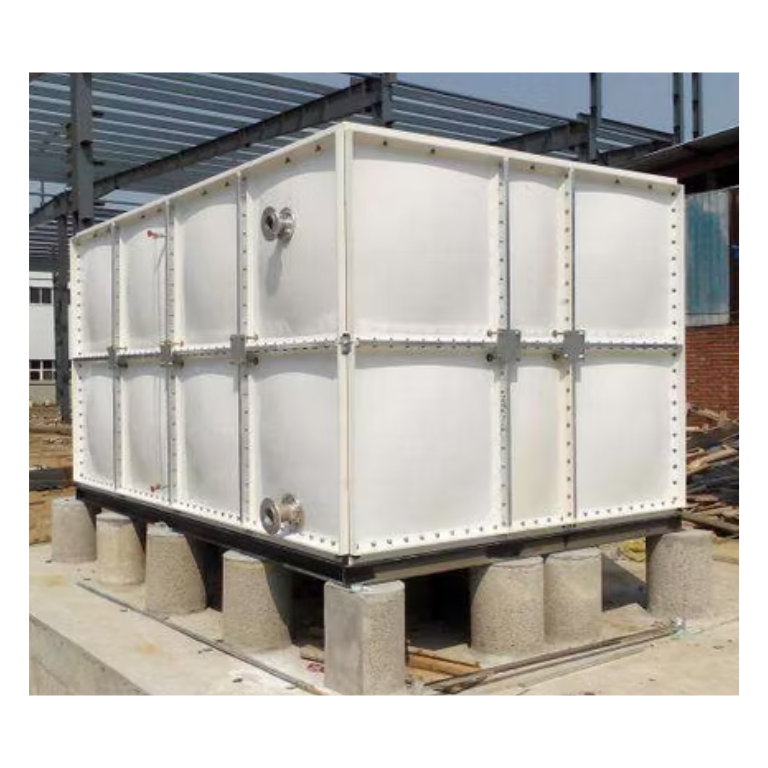
An FRP Water Tank is engineered to deliver long-term, reliable, and hygienic water storage using advanced fiberglass-reinforced plastics (FRP). Known for its superior strength, lightweight construction, and excellent corrosion resistance, it provides a modern alternative to conventional steel and concrete tanks. This tank is specifically designed for environments where durability and water purity are top priorities, ensuring consistent performance in residential, commercial, and industrial settings. By using multi-layer FRP composites, the tank maintains stability under varying load and temperature conditions while preventing rust, contamination, or structural wear.
Manufactured with precision by Shandong Wanneng Group, this FRP Water Tank integrates innovative design elements such as sealed panel joints, anti-leakage reinforcement, and modular construction. Whether used as an FRP storage tank, FRP sectional water tank, or a high-capacity FRP water storage tank, it delivers dependable water management across diverse applications. From safe potable water storage to complex operations such as cooling systems and water treatment processes, the tank offers a trusted and long-lasting solution for all water-related requirements.
Product Description
The FRP Water Tank is built from high-quality fiberglass-reinforced plastics (FRP), a composite material known for its exceptional mechanical strength and environmental stability. Through a controlled manufacturing process, layers of fiberglass are saturated with premium resin and precisely molded to create rigid, leak-proof panels. Once cured, these panels form a fully structural, corrosion-free FRP Water Tank that maintains its integrity even in challenging climates. This advanced construction ensures the tank remains strong yet lightweight, offering easier handling and transport compared to steel tanks.
Every FRP Water Tank can be designed as a modular FRP sectional water tank, allowing flexible assembly in spaces with limited access. Optional reinforcements, insulation layers, UV-resistant coatings, and anti-corrosion surfaces can be added depending on project requirements. These enhancements make this tank suitable for various operational needs, whether you require an FRP tank for water treatment, a chemical-safe FRP/GRP storage tank, or a standard residential water tank FRP installation.
Unlike metal or concrete alternatives, the FRP Water Tank does not corrode, crack, or deform. Its smooth interior surface helps maintain water purity by preventing sediment buildup and algae formation. Designed to accommodate capacities from small to large installations, this robust FRP water tank provides long-term performance with minimal maintenance, making it a cost-effective and highly dependable choice for modern water storage systems.
Technical Specifications
-
Material: High-strength fiberglass-reinforced plastics (FRP)
-
Design Structure: Modular, sealed joint construction; customizable dimensions
-
Capacity Range: Custom-built solutions for small, medium, and large projects
-
Panel Options: UV-protected, insulated, anti-corrosion coated, and food-grade interior
-
Inlet/Outlet System: Engineered for stable water flow and reduced pressure disturbance
-
Ventilation: Multi-layer dust-proof vent to preserve water hygiene
-
Support System: Optional internal braces for large tanks or high-pressure conditions
-
Durability: Corrosion-proof, weather-resistant, and impact-resistant construction
-
Certifications: Manufactured under strict quality, safety, and hygiene standards
Key Features & Benefits
1. Exceptional Corrosion Resistance
The FRP Water Tank offers outstanding resistance to rust, oxidation, and chemical damage. Unlike metal tanks that deteriorate over time, FRP maintains structural integrity in humid, coastal, or industrial environments. This corrosion resistance extends lifespan and eliminates the need for expensive anti-rust treatments.
2. Lightweight Yet High Strength
Thanks to its advanced composite structure, the tank is significantly lighter than steel alternatives while maintaining superior load-bearing strength. This lightweight property allows easier transportation, crane-free installation, and reduced labor costs during setup, making it ideal for both ground and elevated installations.
3. Hygienic & Safe Water Storage
The smooth interior of the FRP Water Tank prevents the buildup of algae, sediments, and biological contaminants. Its sealed joints keep dust and impurities out, ensuring that stored water remains clean. Whether used as an FRP water storage tank or a potable water reservoir, it meets strict hygiene standards.
4. Modular & Customizable Construction
This tank can be manufactured as an FRP sectional water tank, allowing it to be assembled panel by panel in confined or difficult-to-access areas. Custom sizes, thicknesses, reinforcements, and insulation options allow adaptability for residential buildings, commercial facilities, and industrial complexes.
5. Long Service Life with Minimal Maintenance
FRP tanks do not corrode, crack, or warp, even under harsh weather or pressure variations. Their durability reduces long-term maintenance costs, and the tank requires only occasional cleaning. With fewer repairs and no need for recoating, operational expenses remain low throughout its lifecycle.
6. Temperature & Weather Resistant
The composite construction enables the tank to withstand extreme temperatures. FRP does not expand or contract like metal tanks, ensuring stability and preventing structural damage. UV-resistant layers also protect the tank when exposed to direct sunlight for prolonged periods.
7. Cost-Effective Water Storage Solution
From manufacturing to installation and long-term maintenance, the FRP Water Tank offers significant cost savings. Its reduced weight lowers transportation costs, while its durability ensures you won’t face recurring expenses from corrosion repair, leak control, or structural restoration.
Applications & Use Cases
1. Residential Water Storage
Ideal for houses, apartments, and high-rise buildings, the FRP Water Tank ensures clean, reliable water for daily household use. Its sealed design prevents contamination, making it especially suitable for potable water storage.
2. Commercial Buildings
Hotels, shopping malls, hospitals, offices, and educational institutions use FRP Water Tanks to maintain a steady, hygienic water supply. The tank’s modular design supports installations in basements, rooftops, and utility spaces.
3. Industrial Water Systems
Factories often require large-scale water storage for processing, cooling systems, and boiler feedwater. The FRP Water Tank performs reliably under fluctuating temperatures and pressures, making it ideal for industrial operations.
4. Water Treatment & Filtration Plants
As an FRP tank for water treatment, the tank supports filtration systems, sedimentation processes, chemical dosing, and effluent storage. Its corrosion resistance ensures compatibility with treated and semi-treated water.
5. Environmental & Rainwater Harvesting Projects
FRP Water Tanks are used in sustainable water management systems, including rainwater harvesting, stormwater storage, and greywater recycling. Their hygienic construction ensures safe storage of collected water.
6. Agricultural & Irrigation Use
Farms and agriculture facilities rely on water tank FRP solutions for irrigation, fertilizer mixing, and livestock hydration. The tank withstands outdoor conditions, making it suitable for rural and agricultural applications.
7. Cooling & HVAC Systems
Used as a dependable reservoir in cooling towers, HVAC plants, and industrial chillers, the FRP Water Tank handles temperature fluctuations without deforming, ensuring smooth system operation.
FAQs
1. What makes an FRP Water Tank better than traditional tanks?
FRP tanks resist corrosion, require less maintenance, and provide cleaner water compared to metal or concrete tanks. They are lighter, stronger, and more durable in harsh weather conditions.
2. Can FRP Water Tanks be customized for different projects?
Yes. FRP Water Tanks can be built in modular designs, allowing custom sizes, panel thicknesses, insulation, supports, and coatings to match your project’s requirements.
3. Is the FRP Water Tank suitable for drinking water?
Absolutely. The interior is food-grade, non-toxic, and prevents contamination. It meets the hygiene standards required for potable water storage.
4. Do FRP Water Tanks require maintenance?
Maintenance is minimal. Occasional cleaning and inspection are enough to ensure optimal performance since FRP does not rust, corrode, or degrade easily.
5. Can the tank be installed in small or restricted areas?
Yes. The FRP sectional water tank design allows panel-by-panel assembly in tight spaces such as rooftops, basements, and narrow utility rooms.
6. What capacities are available?
FRP Water Tanks are available in custom capacities, from small residential units to large industrial reservoirs. You can request sizes based on your project needs.
7. How long does an FRP Water Tank last?
With proper installation, it can last decades. Its corrosion-free structure ensures long service life with very low maintenance costs.